AI Governance Association
(General Incorporated Association)


Mission of the AI Governance Association
The AI Governance Association is a forum that brings together all stakeholders involved in AI, working to realize a society in which "AI Governance" — the practice of maximizing the value of AI through appropriate risk management — becomes common practice.
In pursuing this mission, the AI Governance Association (AIGA) places particular value on the following three principles:
Adhering to social values: AI should be used in ways that respect societal values such as human dignity, diversity, safety, and the protection of the human environment.
Building Trust through a Multi-Stakeholder Approach: All parties involved with AI should build and maintain mutual trust through open dialogue with stakeholders that goes beyond discussions within their own organizations.
Promoting Innovation: AI Governance should not constrain AI use; rather, it should be implemented to promote innovation, enable the creation of new services, address social issues, and enhance productivity.
Building a Shared Understanding of AI Governance Among Member Companies
Promoting the AI Governance Action Agenda
Creating Opportunities for Member Companies to Share Information on AI Governance
Examining AI Policy and Regulatory Frameworks and Making Recommendations to Government
Participating in Policy Discussions
Examining and Proposing Medium- to Long-Term Frameworks Such as Certification Schemes
Officers
Representative Directors

Kojin Oshiba — Co-founder, Robust Intelligence; Director of AI Engineering, Cisco

Masashi Namatame — Senior Managing Executive Officer & Group CDO and CAIO, Meiji Yasuda Life Insurance Company

Hiroki Habuka — Representative Director and CEO, Smart Governance; Specially Appointed Professor, Kyoto University; Attorney
Directors

Fumino Senaha — Director, Senior Managing Executive Officer & COO, Recruit Holdings
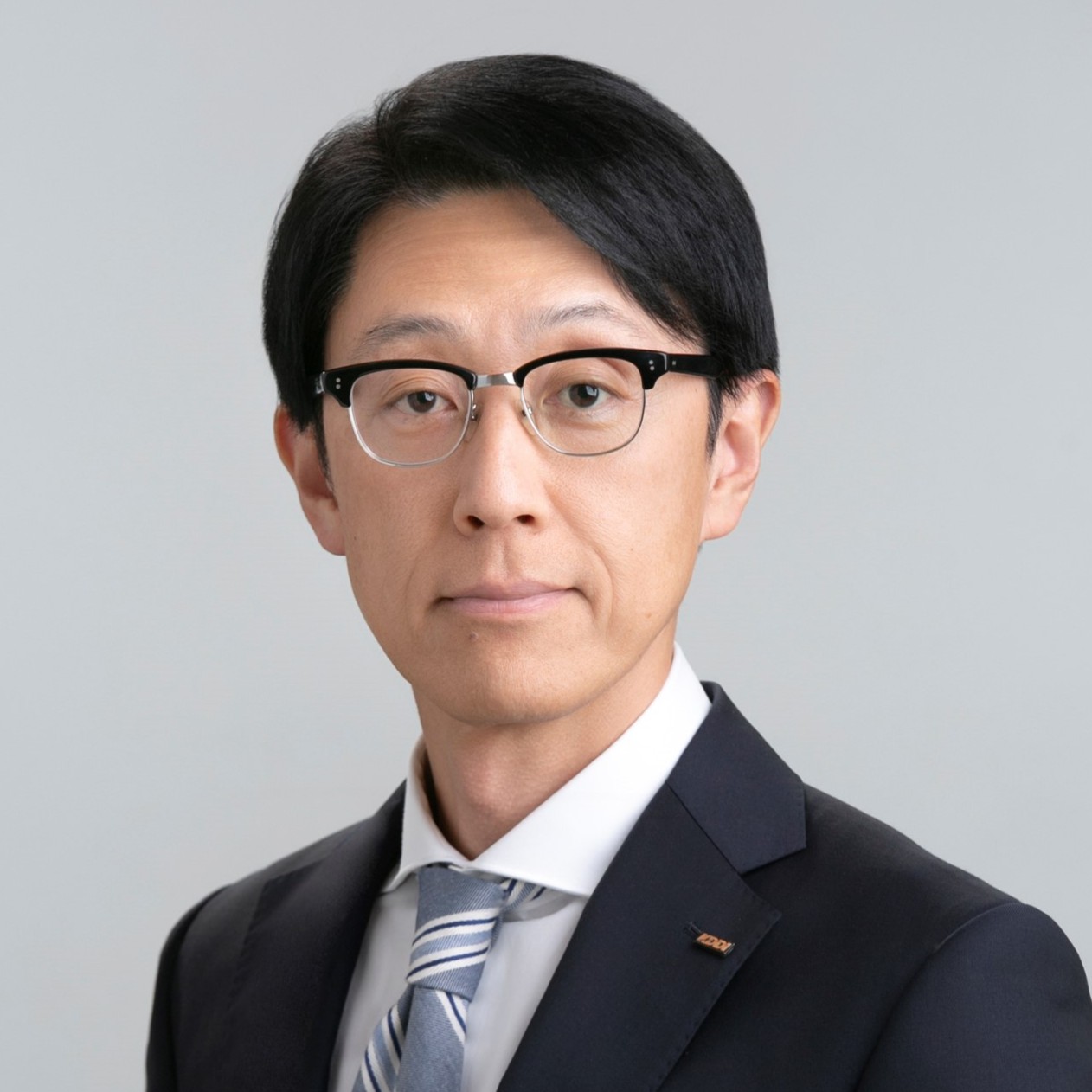
Tomohiko Katsuki — Director, Managing Executive Officer, CSO and CDO; Head of Corporate Strategy Division and Head of Open Innovation Division, KDDI

Tadashi Yamamoto — Managing Executive Officer; Head of Retail & Digital Business Division and Group CDTO, Mitsubishi UFJ Financial Group
Executive Directors

Hiroaki Sakuma — Executive Director and Secretary General, AI Governance Association

Tomoharu Hase — Partner, Deloitte Touche Tohmatsu LLC
Auditor

Tomoko Tsuruno — Director, CSR Design Green Investment Advisory Co., Ltd.; Certified Public Accountant
Expert Members

Master's degree, Graduate School of Arts and Sciences, The University of Tokyo (1990); Master's, MIT Technology and Policy Program (1997); PhD, National Graduate Institute for Policy Studies (2013). Joined the Ministry of International Trade and Industry (now METI) in 1990 and has since worked on a range of technology, innovation, digital, and AI policies. Held positions including Cabinet Counsellor, Cabinet Secretariat IT Strategy Office (2013); Director-General, AI Strategy Department, AIST (2017); and Professor, Institute for Innovation Research, Hitotsubashi University (2020). Areas of expertise: digital and innovation policy; AI Governance frameworks. PhD (Policy Studies).

Graduate of the Faculty of Law, The University of Tokyo, and Harvard Law School. After working at Weil, Gotshal & Manges (Silicon Valley), he assumed his current position. He has served as a member of numerous government bodies, including the Cabinet Office's "AI Strategy Council" and "Examination Group on Intellectual Property in the AI Era," METI's "AI/Data Contract Guidelines Committee" and "AI Governance Guidelines Working Group," the Liberal Democratic Party's working group on the "AI Evolution and Implementation Project Team," the Tokyo Metropolitan Government's expert committee on "Generative AI Use Guidelines," and the JPO's Industrial Property Council; he is also Visiting Professor at Aoyama Gakuin University Graduate School, Visiting Researcher at the Institute for Future Initiatives at The University of Tokyo, and a Director of the Dark Patterns Countermeasures Association. His main practice areas include technology, intellectual property, personal information, and cybersecurity matters.
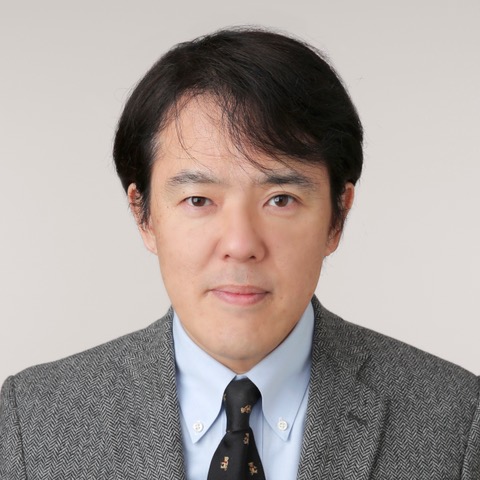
Akira Otsuka received his M.S. degree in Engineering from Osaka University in 1991 and joined Nomura Research Institute, Ltd. in the same year. He earned his Ph.D. in Engineering from the Department of Information and Communication Engineering, Graduate School of Engineering, The University of Tokyo in 2002.
From April 2005 to March 2017, he was with the National Institute of Advanced Industrial Science and Technology (AIST), where he served as Research Team Leader of the Security Fundamentals Research Team at the Information Security Research Center from 2006 to 2010. Since April 2017, he has been a Professor at the Institute of Information Security (IISEC). He also served as a Professor at the Research Organization for Science and Engineering, Chuo University, from 2007 to 2014.
His academic teaching experience includes part-time lecturing positions at the Graduate School of Engineering, Tokyo University of Science (2009–2011); the Department of Mathematics, Faculty of Science, Josai University (2015–2022); the School of Information Science, Japan Advanced Institute of Science and Technology (JAIST, 2016); and the Graduate School of Engineering, Osaka University (2022–present). He was a Visiting Scholar at the Institute for Monetary and Economic Studies, Bank of Japan (2020–2021).
He is a member of IEICE, IPSJ, IEEE, IACR, and IFCA. He serves as Advisor to the Technical Committee on Biometrics (IEICE), Representative of the JNSA Cybersecurity Industry-Academia Collaboration Council, Advisor to the Special Interest Group on Security and Safety (SIG-SEC, JSAI), and Expert Committee Member of the AI Safety Institute Japan (AISI / JAI-Trust).

Graduate of the Department of Mathematical Sciences, Faculty of Science and Technology, Keio University. Passed the (former) bar examination while a graduate student in the same field. After approximately nine years at Mori Hamada & Matsumoto, he established the Prototype Policy Research Institute at Atsumi & Sakai. In 2022, he co-founded Smart Governance Inc., where he serves as Representative Director. He has held positions including Chair of the Startup Innovation Promotion Working Group at the Cabinet Office's Council for the Promotion of Regulatory Reform; Policy Adviser (Data Utilization System Review) for the Cabinet Secretariat's Council on Digital Administrative and Fiscal Reform; member of the Governance Subcommittee of the AI Networking Conference at the Ministry of Internal Affairs and Communications; member of the SWG examining social rules for autonomous vehicles in the AI era at the Digital Agency, METI, and MLIT; and Adjunct Lecturer at the Faculty of Law, The University of Tokyo. He works on business development, organizational design, and policy formulation related to technology implementation.

Handles competition law / antitrust matters in the IT and digital platform fields, including AI, as well as a wide range of other economic regulatory matters such as consumer protection, telecommunications, and various industry-specific regulations. He is also well-versed in research and analysis of domestic and international digital policy, including trade. Speaker at GPAI 2022.

Graduated from the Faculty of Law, Kyoto University (2004); Kyoto University School of Law (2006); and Columbia Law School (LL.M., 2013). He provides advice across general corporate matters with a focus on the technology, media, and telecommunications (TMT) sectors — including M&A and strategic alliances, licensing and joint development and other IP-related transactions, support for new technology-related businesses (AI/Robotics, Data/IoT, Fintech/Web3, Metaverse/XR, platform businesses, etc.), venture investment and startup law, digital media and entertainment, gaming, telecommunications, space, personal information / data protection, shareholders' meetings, and governance.

After serving as Policy Secretary to a member of the Diet, she worked at the Consumer Affairs Agency and the Cabinet Secretariat IT Strategy Office on amendments to the Act on the Protection of Personal Information, and at the Personal Information Protection Commission on preparations for its enforcement. As an attorney, she provides comprehensive support — including governance for data and personal information / privacy — across the public, private, and academic sectors. She also serves on a range of expert committees not only at companies but also at administrative agencies and local governments, including as a Councillor of GovTech Tokyo and a member of MHLW's working group on the secondary use of medical and other information.

Specializes in technology law concerning AI, data, and other emerging fields. Member of the Cabinet Office's "Council for Examining Human-Centered AI Society Principles" and "AI System Study Group," and member of METI's "AI/Data Contract Guidelines Committee." Author of numerous publications, including "Legal Risks of Generative AI and Countermeasures," "Legal Issues of AI Profiling," "Textbook of AI/Data Ethics," "Law and Contracts on Data," and "AI Law."

